
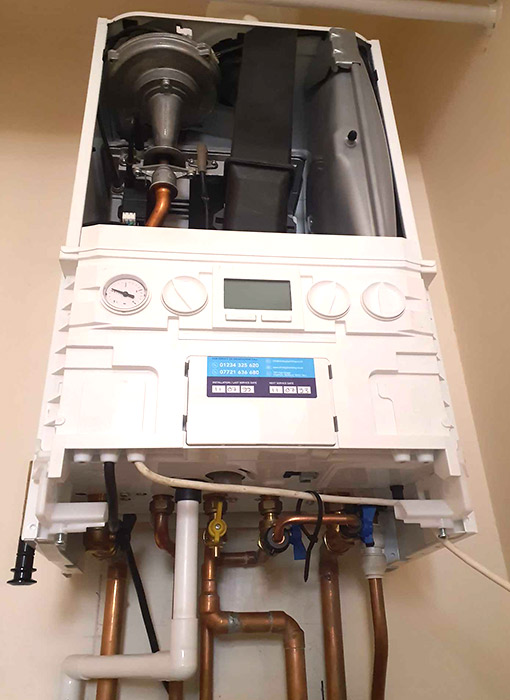
You might dismiss low pressure or ‘chuffing noises’ or slight brown stains on the worktop under the boiler, and these kinds of common boiler faults are often dismissed at first, only for the problem to escalate over time and potentially become terminal.
It is rare for a boiler just to stop working.
You might have to top up your boiler pressure every few months, but this will become every few weeks, then every few days. This means that there is a leak somewhere in the system, as it’s not holding pressure. The boiler might work temporarily, but the rest of your system starts to be put under strain.
Chuffing or kettling noises are usually a sign that limescale or sludge is affecting how efficiently the boiler is operating, and the boiler might overheat like your De’Longhi, and this equates to damage!
Small leaks showing up on the worktop might corrode the inside of your boiler, damaging otherwise working parts.
Typical early boiler issues discussed include:
- Low or fluctuating pressure
- Banging or rumbling noises (kettling)
- Small visible leaks
- Radiators not heating evenly
- Hot water is taking longer to come through
- Boiler switching off unexpectedly
Ryan said many homeowners try to live with early symptoms rather than calling for help straight away.
“It’s understandable because no one wants the disruption or cost of a repair call.”
You might think, “I can’t afford to call someone out and pay that bill. But if you leave it, you are just kicking the can down the road, and looking at costs snowballing when the boiler finally gives up.
All your boiler needs is not to be ignored and a little bit of TLC. So invest in an annual service where we would highlight potential issues early, and don’t wait for a full breakdown.